
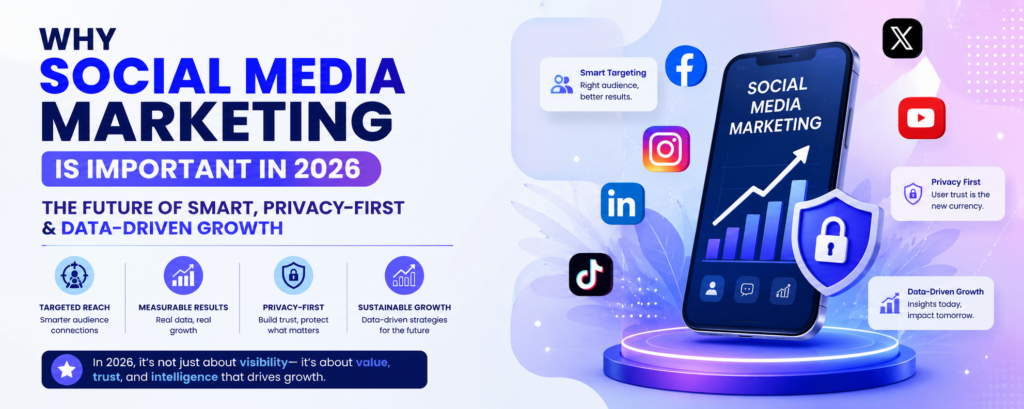
How Important Is Social Media Marketing? A Complete Guide to Business Growth in the Digital Era
Introduction
In today’s digital-first world, social media marketing has transformed from an optional promotional tactic into a fundamental business strategy. Whether a company is a startup, a local business, an e-commerce store, or a multinational corporation, social media has become one of the most effective ways to connect with customers, establish trust, and generate long-term growth.
Billions of people spend hours every day on platforms like Instagram, Facebook, LinkedIn, X (formerly Twitter), Pinterest, YouTube, and TikTok. These platforms are no longer used only for entertainment—they have become spaces where people discover brands, research products, read reviews, interact with businesses, and make purchasing decisions.
Social media marketing is much more than posting attractive images or uploading videos. It involves creating valuable content, understanding audience behavior, building relationships, increasing brand awareness, generating leads, improving customer service, and driving measurable business results. Companies that embrace social media strategically often experience stronger customer engagement, better brand recognition, and higher revenue growth compared to those that ignore digital platforms.
This blog explores the importance of social media marketing, its benefits, and why every modern business should consider it an essential part of its marketing strategy.
What Is Social Media Marketing?
Social media marketing (SMM) is the process of promoting a business, product, service, or personal brand through social media platforms. It includes creating and sharing valuable content, interacting with audiences, running paid advertising campaigns, analyzing performance metrics, and continuously optimizing strategies to achieve marketing goals.
The primary objective of social media marketing is not merely gaining followers but creating meaningful relationships that convert audiences into loyal customers.
Popular social media platforms include:
- YouTube
- TikTok
- X (formerly Twitter)
- Snapchat
Each platform serves different audiences and business objectives, allowing companies to customize their marketing approach according to customer preferences.
Why Social Media Marketing Is Important
1. Builds Brand Awareness
One of the greatest advantages of social media marketing is its ability to increase brand visibility. Millions of users actively browse social media every minute, providing businesses with endless opportunities to introduce their products and services to potential customers.
Consistent posting helps businesses remain visible and memorable. The more people encounter a brand online, the more likely they are to remember it when making purchasing decisions.
Strong brand awareness eventually leads to increased trust and customer loyalty.
2. Helps Reach the Right Audience
Traditional advertising often reaches a broad audience regardless of their interests. Social media marketing, however, allows businesses to target very specific groups based on factors such as:
- Age
- Gender
- Location
- Occupation
- Interests
- Online behavior
- Shopping habits
This precise targeting improves marketing efficiency by ensuring promotional content reaches people who are genuinely interested in the business.
As a result, companies spend their marketing budget more effectively while increasing conversion rates.
3. Creates Strong Customer Relationships
Modern customers expect businesses to communicate directly with them.
Social media enables brands to:
- Respond to questions quickly.
- Solve customer issues.
- Thank customers for purchases.
- Gather valuable feedback.
- Build genuine conversations.
When customers feel heard and appreciated, they develop stronger emotional connections with the brand. These relationships often lead to repeat purchases and positive word-of-mouth recommendations.
4. Drives Website Traffic
Every social media post creates an opportunity to direct users toward a company’s website.
Businesses can promote:
- Blog articles
- Product pages
- Service pages
- Landing pages
- Portfolio
- Case studies
- Contact forms
Higher website traffic increases opportunities for lead generation, online sales, newsletter subscriptions, and customer inquiries.
5. Increases Sales and Revenue
Consumers frequently discover products through social media before making a purchase.
High-quality content showcasing product benefits, customer reviews, demonstrations, tutorials, and success stories encourages users to move through the buying journey.
Many social platforms now offer integrated shopping features, making purchases easier than ever without requiring users to leave the platform.
This seamless customer experience contributes directly to higher sales.
6. Builds Trust and Credibility
Trust plays a major role in consumer purchasing decisions.
Businesses that consistently publish educational content, customer testimonials, behind-the-scenes updates, and authentic stories appear more transparent and reliable.
Positive reviews, active communication, and genuine engagement strengthen credibility over time.
People prefer buying from brands they know and trust rather than unknown competitors.
7. Offers Cost-Effective Marketing
Compared to traditional advertising methods such as television, newspapers, magazines, and billboards, social media marketing is significantly more affordable.
Even businesses with limited budgets can:
- Create valuable content.
- Build an audience organically.
- Run affordable advertising campaigns.
- Monitor campaign performance.
This makes social media marketing especially beneficial for startups, freelancers, and small businesses looking to maximize their return on investment.
Social Media Marketing Improves Customer Engagement
Customer engagement refers to how audiences interact with a brand’s content.
Examples include:
- Likes
- Comments
- Shares
- Saves
- Direct messages
- Story interactions
- Video views
Higher engagement indicates stronger audience interest.
Interactive content such as polls, quizzes, contests, question stickers, live sessions, and educational videos encourages audiences to actively participate instead of passively consuming content.
Engaged audiences are more likely to become loyal customers.
Social Media Helps Businesses Understand Customers
Every interaction on social media provides valuable customer insights.
Businesses can analyze:
- Audience demographics
- Popular content types
- Customer preferences
- Purchase behavior
- Engagement patterns
- Peak activity hours
These insights help marketers create more relevant content while improving future marketing campaigns.
Data-driven decision-making significantly increases campaign effectiveness.
Competitive Advantage Through Social Media
Businesses that actively invest in social media often outperform competitors who rely solely on traditional marketing.
An effective social media presence enables businesses to:
- Showcase expertise.
- Highlight customer success stories.
- Demonstrate product quality.
- Respond faster to customer needs.
- Stay relevant in changing markets.
Remaining active online helps businesses adapt quickly to industry trends and customer expectations.
Social Media Supports Search Engine Optimization (SEO)
Although social media does not directly determine search engine rankings, it contributes significantly to overall SEO performance.
Benefits include:
- Increased website traffic.
- Greater content visibility.
- More backlink opportunities.
- Improved brand recognition.
- Higher content sharing.
- Enhanced online authority.
When people frequently search for a brand online, search engines recognize growing user interest, indirectly supporting long-term SEO efforts.
Importance for Small Businesses
Small businesses often face challenges competing against larger companies with extensive advertising budgets.
Social media creates equal opportunities by allowing small businesses to:
- Reach local customers.
- Showcase products creatively.
- Build community trust.
- Receive customer reviews.
- Advertise within limited budgets.
A well-planned content strategy can produce impressive results even without significant financial investment.
The Role of Content in Social Media Marketing
Content is the foundation of successful social media marketing.
High-performing content generally includes:
- Educational posts
- Informative articles
- Short-form videos
- Infographics
- Customer testimonials
- Behind-the-scenes content
- Product demonstrations
- Industry tips
- Frequently asked questions
Rather than constantly selling, businesses should focus on solving customer problems and providing genuine value.
Helpful content naturally builds authority and attracts long-term followers.
Measuring Success in Social Media Marketing
Unlike traditional marketing, social media provides measurable performance data.
Businesses can track:
- Reach
- Impressions
- Engagement rate
- Website clicks
- Conversion rate
- Lead generation
- Follower growth
- Customer retention
- Return on investment (ROI)
These metrics allow marketers to evaluate campaign performance and make informed improvements continuously.
Common Mistakes Businesses Should Avoid
While social media offers tremendous opportunities, poor strategies can reduce effectiveness.
Some common mistakes include:
- Posting inconsistently.
- Ignoring customer comments.
- Focusing only on sales.
- Using low-quality visuals.
- Copying competitors.
- Not analyzing performance.
- Posting without a clear strategy.
- Ignoring audience feedback.
Successful businesses prioritize consistency, creativity, authenticity, and continuous learning.
Future of Social Media Marketing
Social media marketing continues to evolve rapidly.
Emerging trends include:
- Artificial Intelligence-powered content creation
- Personalized customer experiences
- Short-form video dominance
- Social commerce
- Influencer partnerships
- Voice search optimization
- Interactive live streaming
- Community-based marketing
Businesses that adapt to these trends will remain competitive and continue building meaningful customer relationships.
The future belongs to brands that combine technology with authentic communication.
Final Thoughts
Social media marketing is no longer a luxury—it is a necessity for businesses that want to thrive in today’s highly competitive digital marketplace. It provides unmatched opportunities to increase brand awareness, engage customers, generate leads, improve customer satisfaction, and drive sustainable business growth.
Regardless of company size or industry, businesses that consistently deliver valuable content, understand their audience, and maintain genuine interactions are more likely to build lasting relationships and achieve long-term success.
The true strength of social media marketing lies not only in reaching millions of people but in creating meaningful conversations that inspire trust, loyalty, and action. As consumer behavior continues shifting toward digital platforms, businesses that invest in strategic social media marketing today will be better positioned for tomorrow’s opportunities.
In the modern business landscape, social media marketing is not simply about being present online—it is about building a recognizable brand, creating valuable experiences, and developing strong customer relationships that translate into measurable business success.